



Choosing the Right Fiber Optic Connector for FTTH: A Complete Guide
For fiber network planners, determining the best connector for FTTH deployments can feel overwhelming with so many splice and termination options on the market. Too often, decisions are driven by cost, availability, or past habits rather than technical fit. At Chengdu Focus Infra Materials, we believe every connector has unique design strengths that directly impact FTTH reliability, performance, and total cost of ownership. In this guide, we break down today’s most widely used fiber optic connector types and share how to select the ideal one for your FTTH project.
What Is a Fiber Optic Connector?
Fiber optic connectors (also called optic fiber connectors) are precision-engineered components that enable quick, repeatable connection and disconnection of fiber optic cables. They terminate fiber links to active equipment or join two fiber segments without permanent splicing. While hundreds of connector variants exist, their key differences lie in mechanical coupling design and physical size.
A high-quality fiber optic connector guarantees stable optical performance by maintaining smooth fiber endfaces and precise end-to-end alignment — critical for low-loss, high-stability FTTH networks. As a trusted supplier of fiber connectivity solutions, Chengdu Focus Infra Materials designs and supplies connectors that meet global FTTH standards for insertion loss, return loss, and durability.
Common Fiber Optic Connector Types for FTTH
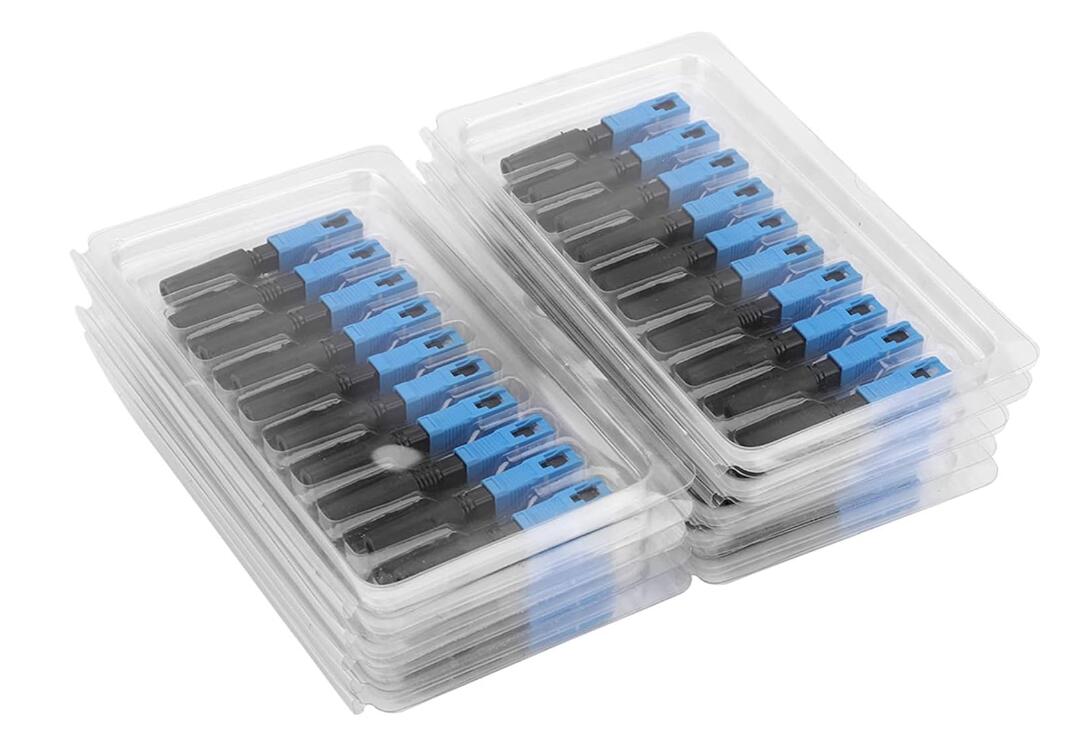
SC Connector
The most popular choice for FTTH worldwide, featuring a square push‑pull housing and 2.5 mm ferrule.
Advantages: Easy to install, cost-effective, stable latching, widely compatible with ONTs and splitters
Best for: Residential FTTH, PON networks, distribution frames
Chengdu Focus Infra Materials offers SC/UPC and SC/APC versions optimized for low reflection in CATV and high‑speed broadband.
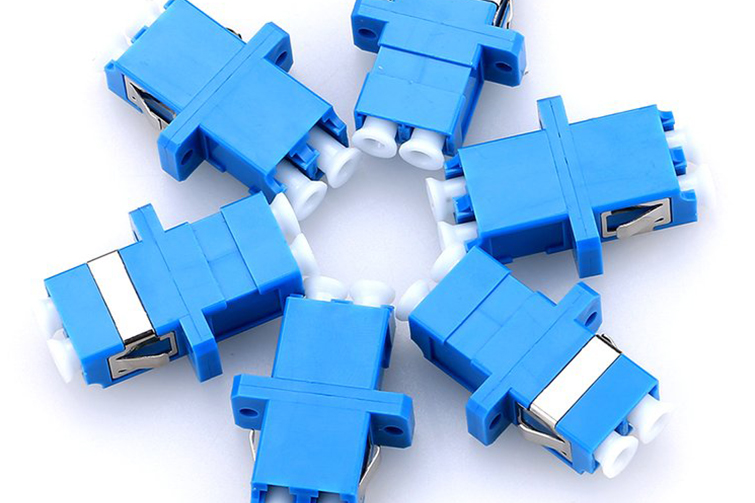
LC Connector
A compact, high‑density connector (half the size of SC) with 1.25 mm ferrule and latch design.
Advantages: Space‑saving, low loss, ideal for high‑port‑density panels
Best for: MDUs, small cells, modern FTTH hubs, and data center edge links
FC Connector
A rugged, threaded connector for high‑vibration and precision environments.
Advantages: Secure mechanical lock, stable under harsh conditions
Best for: Outdoor terminals, test equipment, industrial FTTH extensions
How to Choose the Right FTTH Connector?
Match your application
Residential FTTH: Choose SC/APC for lowest return loss and broad compatibility.
High‑density sites: Use LC to save rack and panel space.
Harsh outdoor environments: Select FC for superior stability.
Prioritize endface polishing
UPC: For standard data transmission
APC (8° angle): For FTTH, CATV, and RFoF links where low reflection is critical
Rely on proven quality
Always select connectors with consistent insertion loss (<0.3 dB), high repeatability, and compliance with IEC and Telcordia standards — the same specifications Chengdu Focus Infra Materials uses for all its FTTH connectivity products.
Final Thoughts
The right fiber connector turns a good FTTH design into a reliable, future‑proof network. Don’t let cost or habit override performance. At Chengdu Focus Infra Materials, we provide tailored fiber optic connectors, patchcords, and termination solutions to help you build faster, more stable, and more cost‑efficient FTTH networks globally.
Related Posts
What is a fiber splice protection sleeve?
Jua 30, 2021